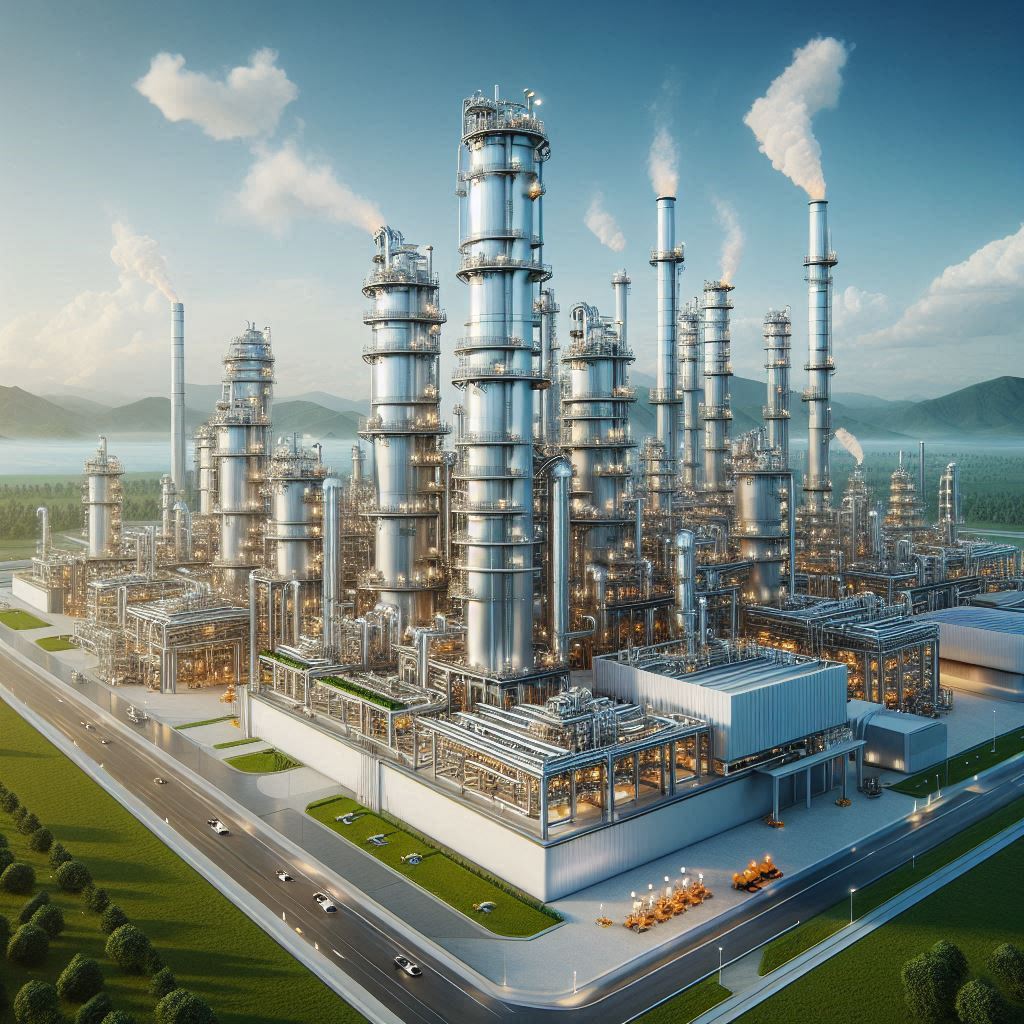
Across boardrooms, policy circles, energy summits, and social media debates, one topic is increasingly dominating East Africa’s industrial conversation: the strategic value of building and sustaining regional refineries.
From the renewed momentum around the Uganda National Oil Company-led refinery initiative in Uganda to discussions surrounding Kenya’s downstream energy ambitions and Tanzania’s growing logistics role, East Africa is beginning to recognize that refining capacity is no longer just an energy issue — it is a geopolitical and economic integration strategy.
The debate is no longer whether East Africa needs refineries. The conversation is now focused on how regional refining can reshape trade, industrialization, energy security, and political influence across the continent.
Why the Refinery Conversation Is Trending
For decades, many African countries exported crude oil or imported refined petroleum products despite possessing natural hydrocarbon resources. This paradox exposed African economies to:
-
Volatile international fuel prices
-
Currency depreciation pressures
-
Supply chain disruptions
-
Dependence on foreign refining hubs
-
Persistent trade deficits
Recent global disruptions — including the COVID-era logistics crisis, the Russia-Ukraine conflict, Red Sea shipping tensions, and fluctuating OPEC dynamics — exposed the vulnerability of relying heavily on imported refined fuels.
East Africa has taken notice.
Governments, investors, and regional economic blocs increasingly view refinery infrastructure as a strategic pillar for:
-
Economic resilience
-
Industrial transformation
-
Energy independence
-
Cross-border integration
The Strategic Importance of an East African Refinery
Energy Security for the Region
East Africa’s fuel demand is growing rapidly due to:
-
Urbanization
-
Industrial expansion
-
Population growth
-
Increased transportation activity
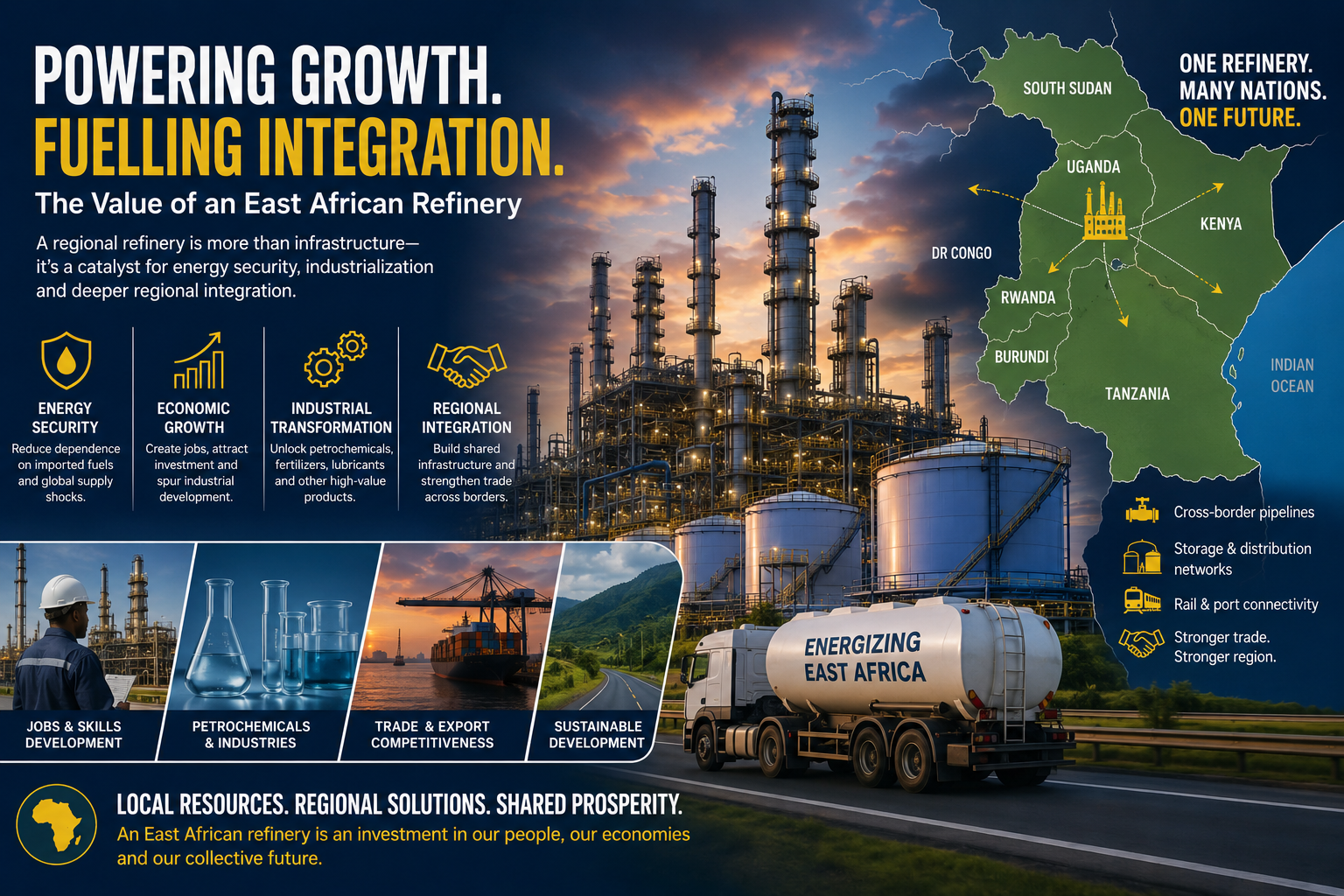
Countries such as Uganda, Kenya, Rwanda, Burundi, South Sudan, Tanzania, and the Democratic Republic of Congo collectively represent one of Africa’s fastest-growing energy consumption corridors.
A regional refinery can:
-
Reduce dependence on imported fuels
-
Stabilize supply during global crises
-
Lower freight and insurance exposure
-
Improve strategic fuel reserves
This becomes particularly critical for landlocked economies like Uganda, Rwanda, Burundi, and South Sudan, which are highly vulnerable to port congestion and external supply shocks.
Refinery Infrastructure as a Regional Integration Tool
The East African Community (EAC) has long pursued deeper economic integration through:
-
Customs harmonization
-
Infrastructure connectivity
-
Common market frameworks
-
Regional trade corridors
A refinery ecosystem accelerates all of these goals simultaneously.
Shared Infrastructure Creates Shared Interests
A successful East African refinery naturally requires:
-
Cross-border pipelines
-
Storage terminals
-
Rail connectivity
-
Port modernization
-
Shared power infrastructure
-
Integrated logistics systems
This interconnected infrastructure strengthens economic interdependence among neighboring states.
The result is not just energy cooperation — it becomes regional economic alignment.
Uganda’s Refinery Ambition and Regional Influence
Uganda’s oil discoveries in the Albertine Graben transformed the country into one of Africa’s emerging petroleum frontiers.
The proposed refinery project, alongside the East African Crude Oil Pipeline (EACOP), has become central to discussions around East Africa’s industrial future.
Supporters argue that refining crude locally instead of exporting all production creates:
-
Higher value retention
-
Local employment
-
Petrochemical opportunities
-
Industrial clusters
-
Domestic manufacturing growth
Critics point to:
-
Financing challenges
-
Energy transition concerns
-
ESG pressures
-
Global decarbonization trends
Yet many African policymakers counter that industrialization cannot occur without reliable and affordable energy systems.
This argument is increasingly resonating across the continent.
Economic Multipliers Beyond Fuel
One of the most overlooked aspects of refinery development is the broader industrial ecosystem it enables.
Modern refineries can stimulate:
-
Petrochemical industries
-
Fertilizer production
-
Plastics manufacturing
-
Bitumen and asphalt supply
-
Aviation fuel markets
-
Lubricant production
-
Industrial gas development
This transforms refineries from simple fuel-processing plants into industrial growth anchors.
For East Africa, this could significantly reduce import dependence across multiple sectors.
Job Creation and Skills Development
Large-scale refinery projects generate employment across:
-
Engineering
-
Construction
-
Logistics
-
ICT
-
Fabrication
-
Environmental services
-
Operations management
More importantly, they help build long-term technical capabilities within the region.
East Africa’s young population represents both a challenge and an opportunity. Refinery-linked industrialization can become a platform for:
-
Vocational training
-
Technology transfer
-
STEM workforce development
-
Indigenous technical expertise
Countries that successfully localize these competencies may emerge as future African industrial leaders.
The Geopolitical Dimension
Global energy politics is shifting rapidly.
Africa is increasingly recognizing that energy infrastructure also translates into geopolitical leverage.
Countries with refining capacity gain:
-
Greater pricing influence
-
Improved trade positioning
-
Enhanced regional diplomacy
-
Strategic supply relevance
An integrated East African energy ecosystem could strengthen the region’s bargaining power globally, especially as Africa seeks more control over its resource value chains.
Challenges That Still Remain
Despite strong momentum, major obstacles remain:
Financing Complexity
Refinery projects require billions in capital expenditure and long payback periods.
Environmental Scrutiny
International lenders increasingly apply ESG and decarbonization criteria to fossil fuel projects.
Political Coordination
Regional infrastructure projects demand sustained political alignment among multiple governments.
Market Competition
Imported refined products from the Middle East and Asia can sometimes remain cheaper due to scale advantages.
The long-term success of East African refining will depend on:
-
Regional policy coordination
-
Competitive pricing structures
-
Infrastructure efficiency
-
Strong governance frameworks
-
Private-sector participation
The Bigger Question: Economic Sovereignty
At its core, the refinery debate is really about economic sovereignty.
Can East Africa move beyond being primarily a raw commodity exporter?
Can the region capture more value domestically?
Can regional integration become practical and infrastructure-driven instead of remaining largely policy-based?
These are the questions driving today’s refinery conversations.
Conclusion
The growing discussion around East African refineries reflects something much larger than energy policy. It represents a broader continental shift toward industrial self-determination, regional integration, and economic resilience.
If executed strategically, refinery infrastructure could become one of the defining catalysts of East Africa’s next development phase — linking nations through shared energy systems, trade networks, industrial growth, and long-term economic cooperation.
The refinery conversation is ultimately about more than oil.
It is about who captures value, who controls supply chains, and how East Africa positions itself in the future global economy.